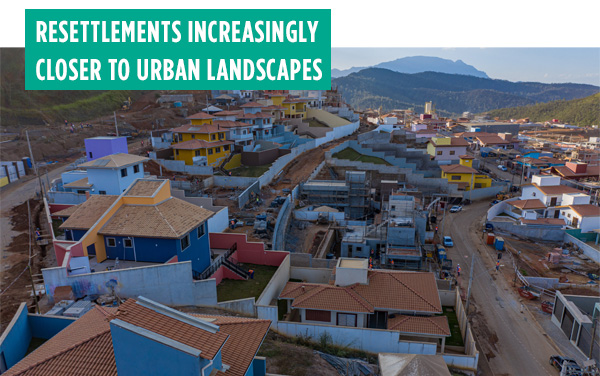
The resettlements built by Renova Foundation are taking on the contours of structured cities, in the way they were thought and designed together with the future residents. In the Bento Rodrigues resettlement, the infrastructure works - which include streets, sidewalks, a drainage system, electricity and water and sewage networks - were completed. The health and service posts and the Municipal School are also ready. The Assembly of God temple and the headquarters of the Hortifrutigranjeiros Association are under construction. With the progress of works in Bento Rodrigues, cultural, socio-environmental and religious activities are being carried out in the place, and they have become part of the families' daily lives.
| Paracatu de Baixo
The resettlement of Paracatu de Baixo is also gradually gaining the design of the district planned together with the community. The infrastructure is ready, with the earthworks of the access roads and areas of the lots, containment, rainwater drainage works, treated water pipeline and sewage network. Public roads have been lit. Other important works were started, such as elementary and children's schools, the advanced health post, the cemetery, the Water Treatment Station (ETA) and the Sewage Treatment Station (ETE). Currently, more than two thousand employees work on the constructions in Paracatu de Baixo.
With the progress of the works, a new phase of dialogue with the families of Bento Rodrigues and Paracatu de Baixo began, since it is possible to plan what life in the resettlements will be like from 2023. To know more.
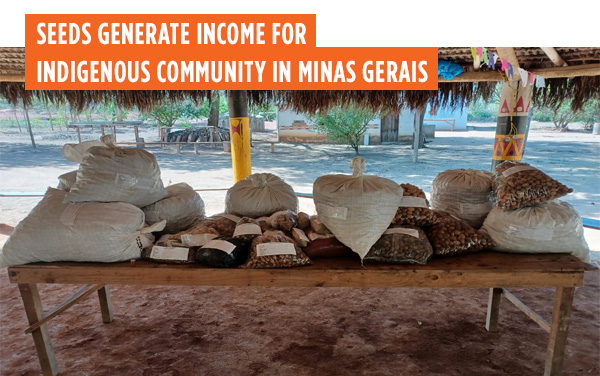
In June, Renova Foundation made the first purchase of seeds collected by indigenous people from the Pataxó Geru Tucunã village, located in Açucena (MG). A total of 242 kg of seeds were acquired from 13 native forest species, including cajazinho (Spondias mombim), boleira (Joannesia princeps), angico-vermelho (Anandenanthera macrocarpa) and garapa (Apuleia leiocarpa). Each species has a specific sales value. The purchase generated an income of more than R$ 20 thousand for the group, which is made up of six collectors.
“Like the other groups, the collectors went through the process of mobilization and technical assistance to learn each stage of the collection. It is gratifying to see the Seed and Seedling Network fulfilling its proposal to contribute to forest restoration by structuring an activity that does not exist in the territory, promoting income diversification and inclusion of communities in the repair process.”
Leandro Abrahão
UST Analyst at Renova Foundation
The seeds will be used in Renova's forest restoration initiatives that are underway in the Doce River basin, in the states of Minas Gerais and Espírito Santo. The goal is to collect 65 tons of seeds to recover 40 thousand hectares of Permanent Protection Areas (APPs) and Water Recharge and 5 thousand springs.
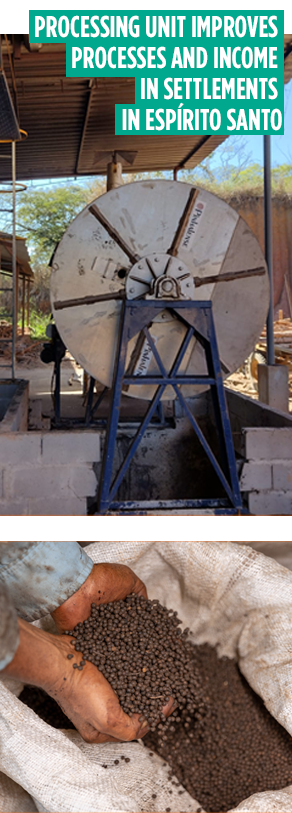
Black pepper farmers from Zumbi dos Palmares settlement in São Mateus (ES) now have a processing unit capable of serving more than 150 families. The action was carried out by Renova Foundation together with the Cooperativa de Beneficiamento, Comercialização e Prestação de Serviços dos Agricultores Assentados (Coopterra) and the inauguration took place on June 29. The own machinery, in addition to adding value to the product, contributes to generating work and income for the families that join the project.
“The objective of the partnership is to promote the diversification of production and the insertion of agricultural social technologies, in order to raise the degree of socioeconomic and environmental development in the countryside, from the families of the agrarian reform settlements included in the project, convergent interests between Renova Foundation and Cooperterra.”
Ana Cristina Lage
Coordinator of the Economy and Innovation Program of Renova Foundation
The project has a budget of more than R$ 2.6 million. The actions also include the construction of a coffee and black pepper processing unit in the Valdício Barbosa settlement, installation of processing equipment in three other settlements, specialized technical assistance and incentives to sell the products. The project should directly and indirectly benefit more than 565 families in nine settlements in Espírito Santo. The action is part of the compensatory projects conducted by Renova Foundation with the aim of boosting the economy of Doce River basin.
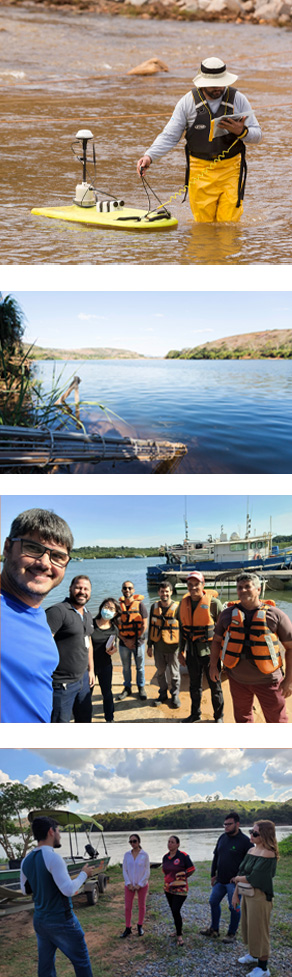
Riverside dwellers, community leaders, fishermen and farmers are participating in theoretical and practical activities to learn how the Systematic Quali-Quantitative Monitoring Program for Water and Sediment (PMQQS) is developed, conducted by Renova Foundation in Doce River basin. In total, the program has 22 automatic stations and 82 conventional monitoring points spread over 690 km of rivers in the basin and 244 km of coastal and estuarine zones.
Participants follow the process of collecting water samples on boats from Renova Foundation and partner laboratories, learn how the analyzes are carried out and watch the demonstration of results.
“The process is cadenced and slow, even so there is no error. Annotated and photographed as well. And with the certainty of not being able to be modified until the laboratory.”
Herval Nogueira Júnior
President of the Community Association of Barra do Riacho in Espírito Santo
“Participants leave the experience with another vision, as they get to know the complexity and importance of water monitoring work. I have received feedback from people saying that they have a better understanding of how water monitoring is a rigorous, reliable and very important process for agriculture. Today, the participants are multipliers of this knowledge for the communities.”
Gustavo Giacomin
Renova Foundation Water Monitoring Analyst
The action is part of the Doce Vivo project, which seeks to guide communities located in Doce River basin on care for the river's water, as well as sharing information about the PMQQS. The monitoring results demonstrate a recovery trend throughout the impacted region, with the resumption of concentrations of water quality parameters at levels prior to those existing before the collapse. To know more.
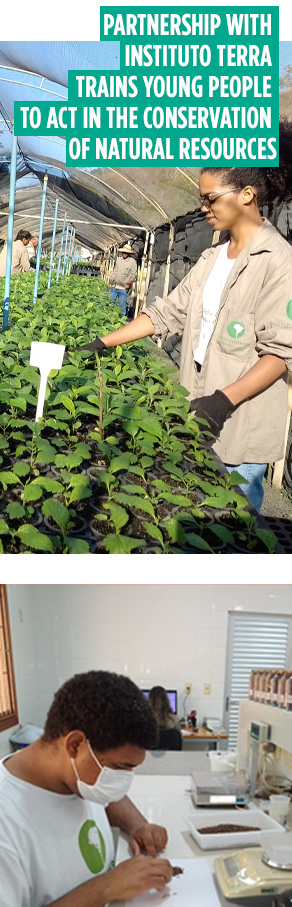
With the collapse of the Fundão Dam, Instituto Terra became one of Renova Foundation's partners in forest restoration, spring recovery and professional training for young people and rural producers. In addition to collaborating in the process of recovering 5,000 springs and 40,000 hectares of permanent preservation areas along the Doce River basin, the institution trains professionals specialized in the restoration of forest ecosystems. This year, 16 students were selected for free training, which includes 2,000 class hours and practical activities. Renova finances thirteen of these young people.
“Investing in the formation of human capital is fundamental for the future of the basin, as these young people will soon be the next managers and will have to make important decisions. Many of these students are hired by Renova Foundation and partners, such as Instituto Terra itself.”
Leonardo Silva
Renova Foundation's Sustainable Development Management
With a total investment of R$ 4.4 million from Renova Foundation, 80 young people of different ages will be trained over the next seven years by Instituto Terra.
“We aim to recover degraded areas in the Vale do Rio Doce region. Partners such as Renova Foundation enhance our actions. Training young people is a way of raising awareness and educating future professionals in rural production to work in the agricultural environment in a more sustainable way.”
Andressa Catharina
Education and People Manager at Instituto Terra
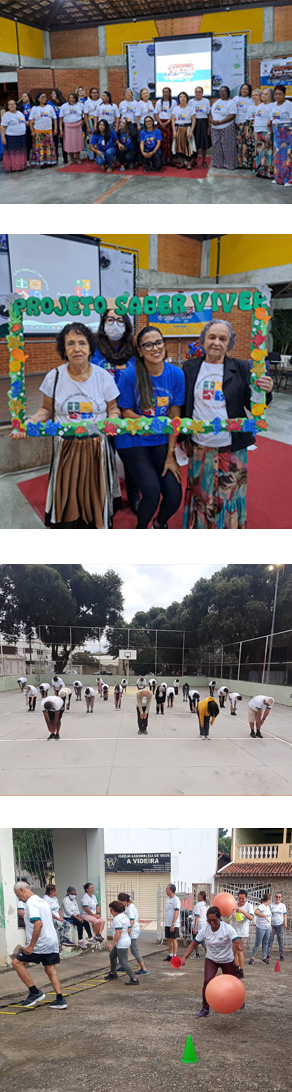
Elderly people, women, teenagers and children in vulnerable situations are being assisted by projects approved in the Social Protection Notice of Renova Foundation. In all, R$ 4 million are being allocated to institutions in Minas and Espírito Santo for the development of activities that promote citizenship and longevity, offer robotics and entrepreneurship classes, as well as workshops on female empowerment, dance, psychological counseling, physical activities, among other actions. Age group and audience interest determine participation in each activity.
In Aracruz (ES), the association Amigos da Justiça, Cidadania e Arte develops the Saber Viver project: building new experiences, aimed at audiences in five communities. This is one of the projects served in the municipality. Dance classes for seniors are one of the most popular activities.
“We can say that this initiative has been a success. We see and hear reports of how these activities transform these people, who come to see opportunities and change their lives. It has been a transformative job.”
Eliane Tartaglia
Coordinator of the Saber Viver project: Building New Experiences
In Minas Gerais, one of the projects contemplated is Physical Activity: citizenship, health and longevity, by the Instituto Brasil Igualdade Social (Ibis), in Governador Valadares. The project holds weekly workshops aimed at people who are over 50 and who want to keep their body and mind in harmony.
“I feel very proud to contribute with work that leads to a very positive transformation in people. Right on the first date, we did a dynamic and in it we saw that a woman couldn't even look at herself in the mirror. Today, she is one of the first to participate in the activities and take pictures.
Christiane Prates Ramos de Oliveira
Coordinator of the Physical Activity project: citizenship, health and longevity
Activities are also carried out in partnership with the institution Rede Vidas in Tumiritinga (MG) with the Strengthening Sociocultural and Assistance Links and Practices project, which aims to promote the protagonism and autonomy of women, children and adolescents from recreational, cultural and sports activities.
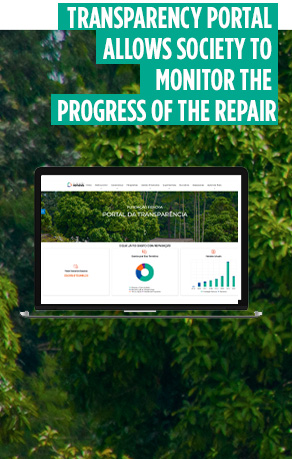
On the air since 2019, the Transparency Portal provides information that allows society to monitor and supervise the repair of damage caused by the collapse of the Fundão dam in Mariana (MG). The platform is interactive and updated according to the remedial and compensatory actions carried out, also counting on financial management, competition and governance data from Renova Foundation. Improvements recently implemented on the platform have optimized the organization of data, facilitated user navigation and made access to information faster and more practical.
The Transparency Portal is part of the international Open Government Partnership (OGP) initiative, which encourages government practices around the world related to government transparency, access to public information and social participation. The construction of the platform was based on the Access to Information Law (LAI) and the structures of the transparency portals of the governments of Minas Gerais and Espírito Santo, states where Renova Foundation operates.